About Martin O'Connor
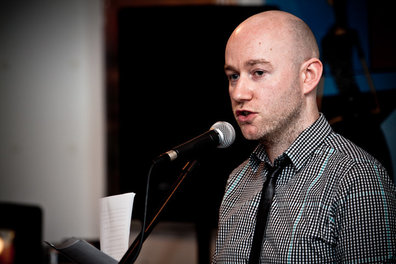
About Martin
Martin O’Connor is a theatre-maker, performer and poet from Glasgow. He is interested in exploring ideas of voice and identity through theatre and poetry, with a particular interests in Scots, Gaelic and verbatim. He makes work for solo performance as well as with, and for, other people. Martin has written, directed and performed for a number of Scottish theatre companies and organisations, such as The Arches, The Tron Theatre, The Citizens Theatre, Scottish Opera, National Theatre of Scotland, Glasgow Life, National Galleries of Scotland, Magnetic North, Platform, and Theatre Gu Leòr.
Central to his performance work is participation and creating work with people through biography and personal narratives. In 2012, Martin completed a Master of Arts in Education (Equality and Diversity) where he specialised in the transformative practice of participatory performance. He has been director of the Tron Theatre Young Company since 2012, and is the current Progression Associate with Toonspeak Young People's Theatre.
In 2018 he was the recipient of the Dr Gavin Wallace Fellowship, in association with Playwrights Studio Scotland and the Lyceum in Edinburgh. He has been Writer in Residence with various organisations including National Theatre of Scotland, Children's Hospices Across Scotland and Firefly Arts, and Creative Writer at the Prince and Princess of Wales Hospice, Glasgow. He is currently the Artist in Residence with both Inverclyde and Glasgow Life.
You can use the contact page to get in touch via email, Twitter or Facebook.
Press quotes for Martin's work:
"O’Connor’s talent for morphing social documentation into a bravura prose-poem...a truly exceptional piece of work." ★★★★★ (The Herald on The Mark of the Beast)
“It will make you smile, laugh, feel moved but most of all put a tap in your foot and a song in your heart” ★★★★★ (Edinburgh Reporter on Turntable)
"Martin O'Connor's script merrily turns the pleasures of a bygone era into some gleefully inventive set pieces...full of fun but painstaking and sophisticated with it" ★★★★★ (The Herald on The Pokey Hat)
"This brilliant young Glasgow writer and performer quietly engineers the most eloquent and moving collision between the language - a display of nuanced language and imagery that confirms him as a brave and significant dramatic poet in contemporary Scotland learning from past masters like Tom Leonard, but moving things on, in a bold and memorable direction of his own." ★★★★ (The Scotsman on Theology)
Martin O’Connor is a theatre-maker, performer and poet from Glasgow. He is interested in exploring ideas of voice and identity through theatre and poetry, with a particular interests in Scots, Gaelic and verbatim. He makes work for solo performance as well as with, and for, other people. Martin has written, directed and performed for a number of Scottish theatre companies and organisations, such as The Arches, The Tron Theatre, The Citizens Theatre, Scottish Opera, National Theatre of Scotland, Glasgow Life, National Galleries of Scotland, Magnetic North, Platform, and Theatre Gu Leòr.
Central to his performance work is participation and creating work with people through biography and personal narratives. In 2012, Martin completed a Master of Arts in Education (Equality and Diversity) where he specialised in the transformative practice of participatory performance. He has been director of the Tron Theatre Young Company since 2012, and is the current Progression Associate with Toonspeak Young People's Theatre.
In 2018 he was the recipient of the Dr Gavin Wallace Fellowship, in association with Playwrights Studio Scotland and the Lyceum in Edinburgh. He has been Writer in Residence with various organisations including National Theatre of Scotland, Children's Hospices Across Scotland and Firefly Arts, and Creative Writer at the Prince and Princess of Wales Hospice, Glasgow. He is currently the Artist in Residence with both Inverclyde and Glasgow Life.
You can use the contact page to get in touch via email, Twitter or Facebook.
Press quotes for Martin's work:
"O’Connor’s talent for morphing social documentation into a bravura prose-poem...a truly exceptional piece of work." ★★★★★ (The Herald on The Mark of the Beast)
“It will make you smile, laugh, feel moved but most of all put a tap in your foot and a song in your heart” ★★★★★ (Edinburgh Reporter on Turntable)
"Martin O'Connor's script merrily turns the pleasures of a bygone era into some gleefully inventive set pieces...full of fun but painstaking and sophisticated with it" ★★★★★ (The Herald on The Pokey Hat)
"This brilliant young Glasgow writer and performer quietly engineers the most eloquent and moving collision between the language - a display of nuanced language and imagery that confirms him as a brave and significant dramatic poet in contemporary Scotland learning from past masters like Tom Leonard, but moving things on, in a bold and memorable direction of his own." ★★★★ (The Scotsman on Theology)